Resveratrol Supplement
Resveratrol Supplement
832 in stock
Couldn't load pickup availability


Why choose NMN capsules?
Discover Our Resveratrol & Rosemary Supplement
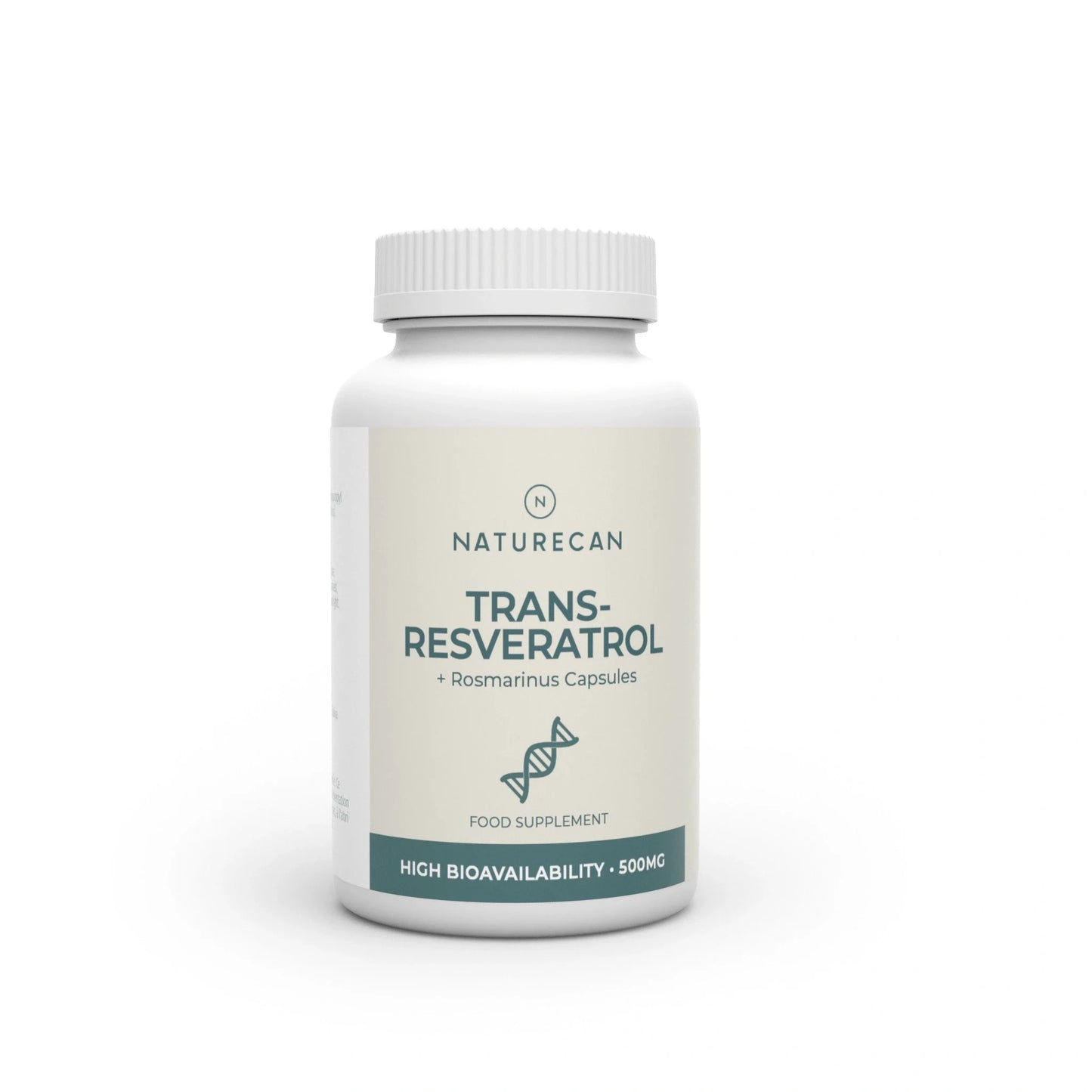
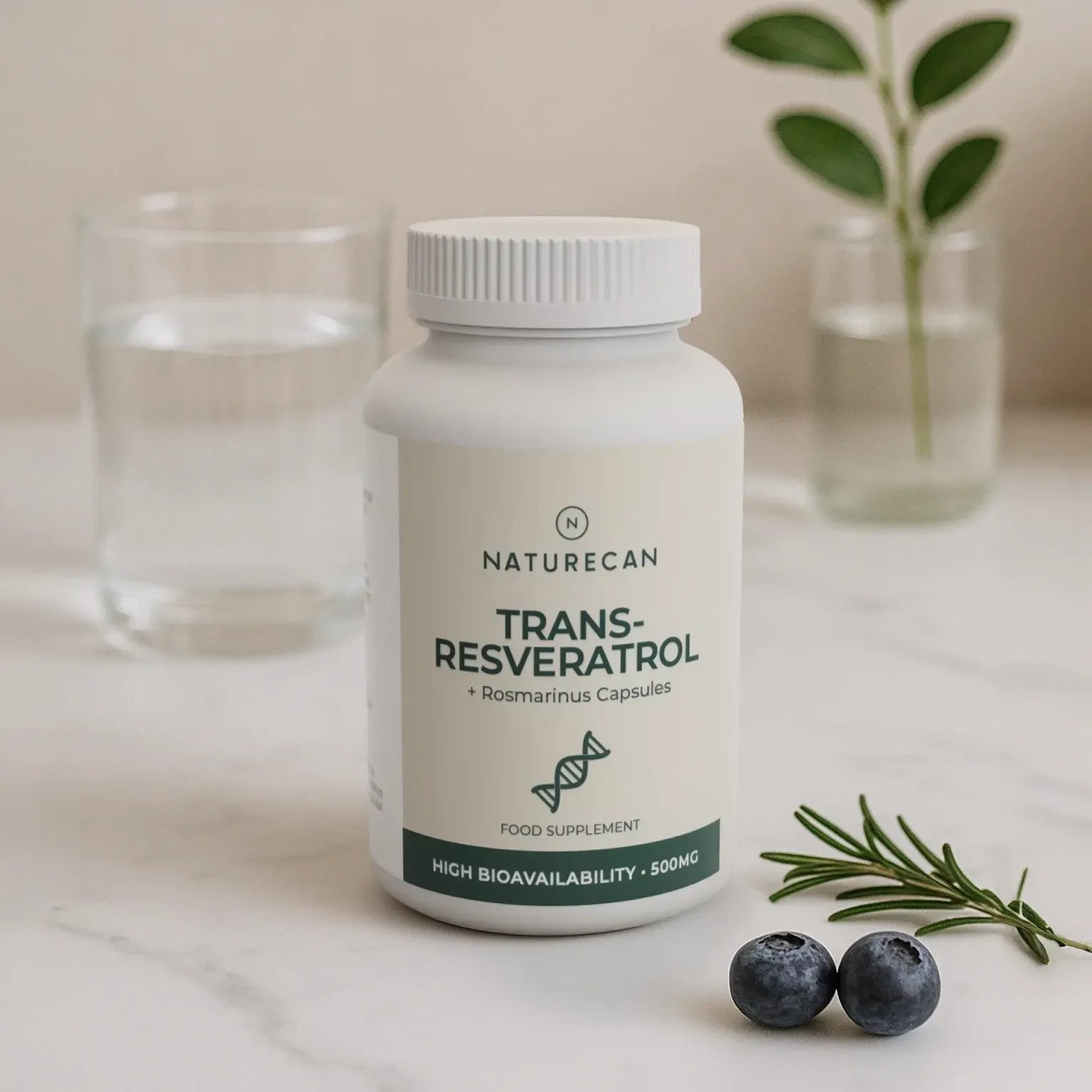
Introducing our new Resveratrol & Rosemary supplement from Naturecan. Add these pure capsules to your daily routine.
Key Points:
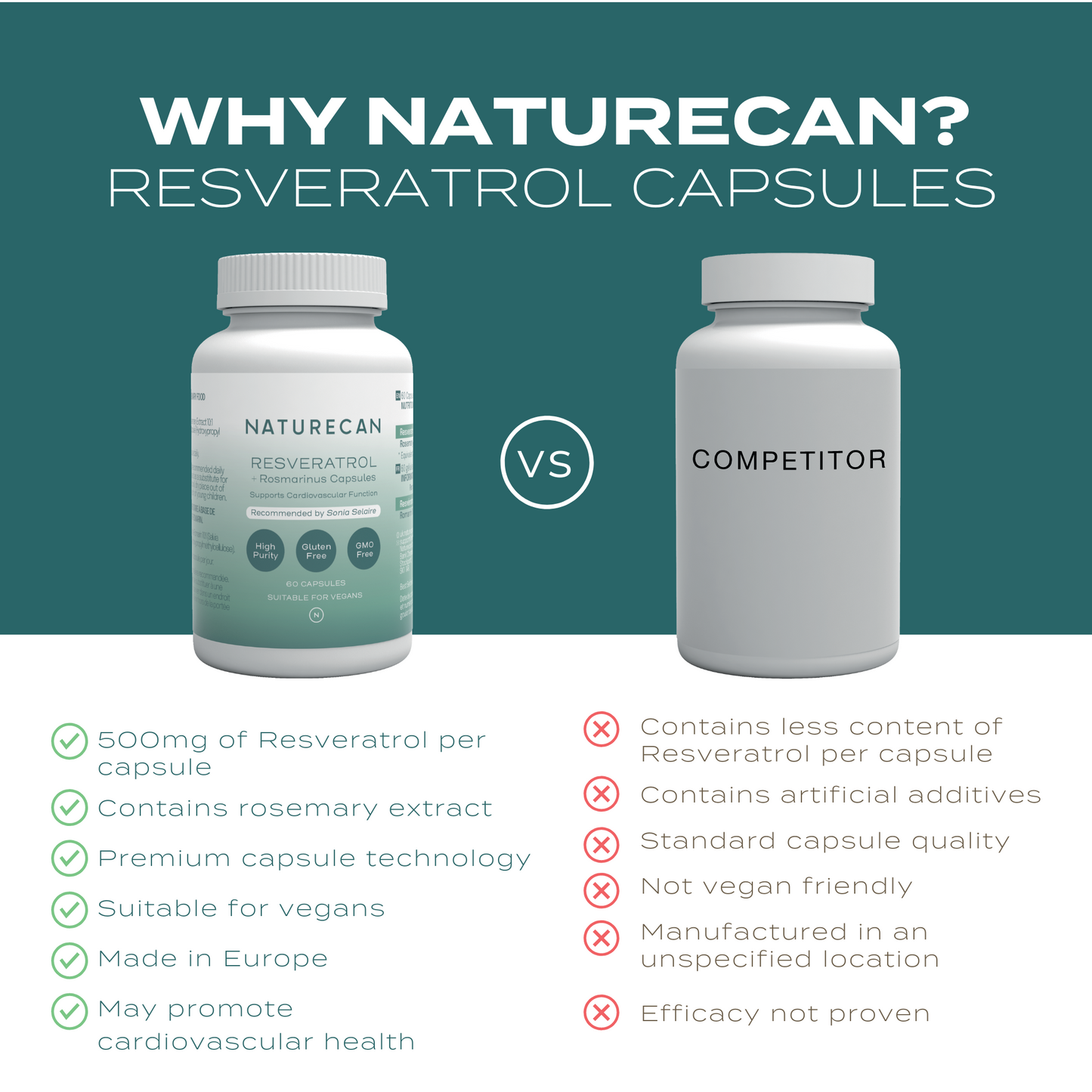
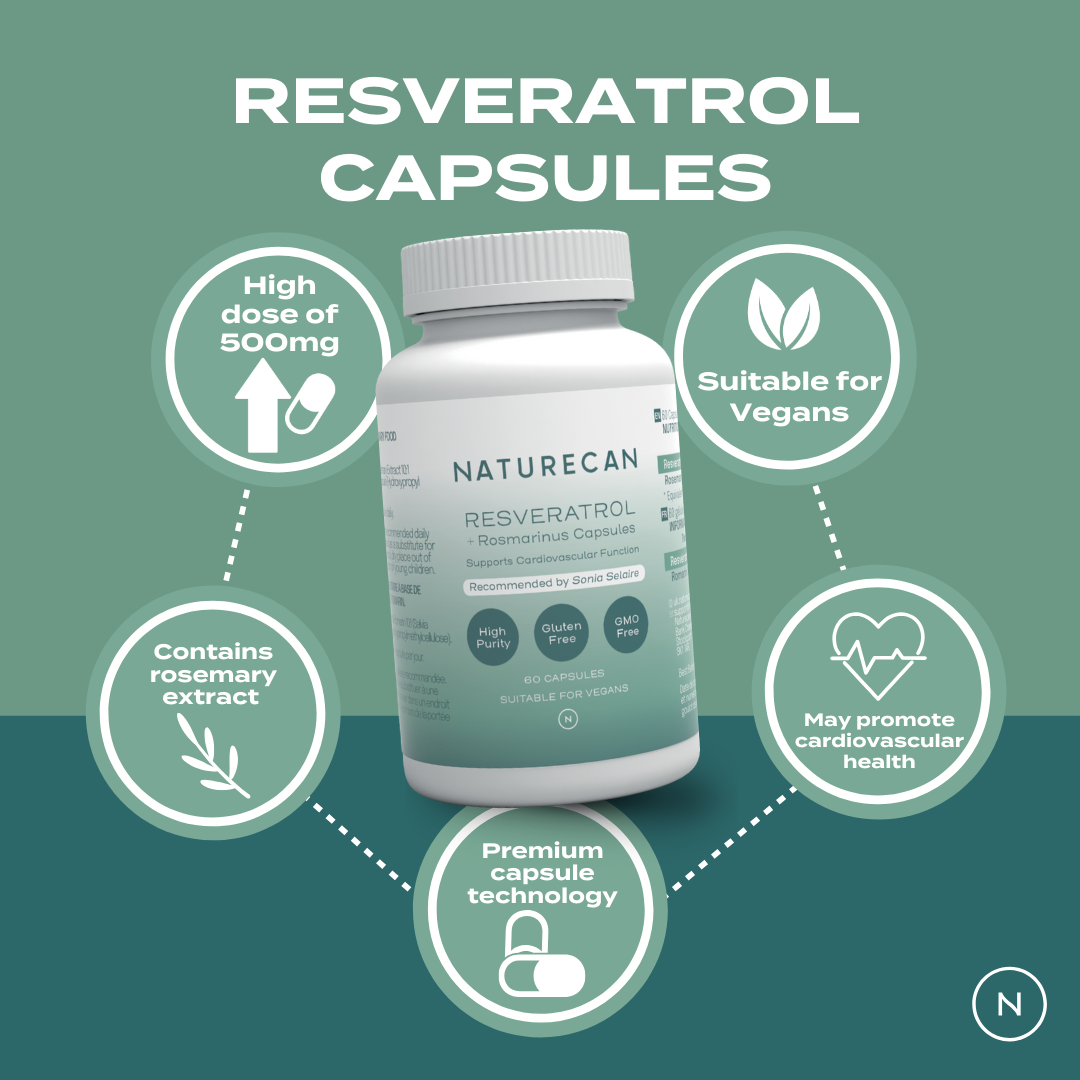
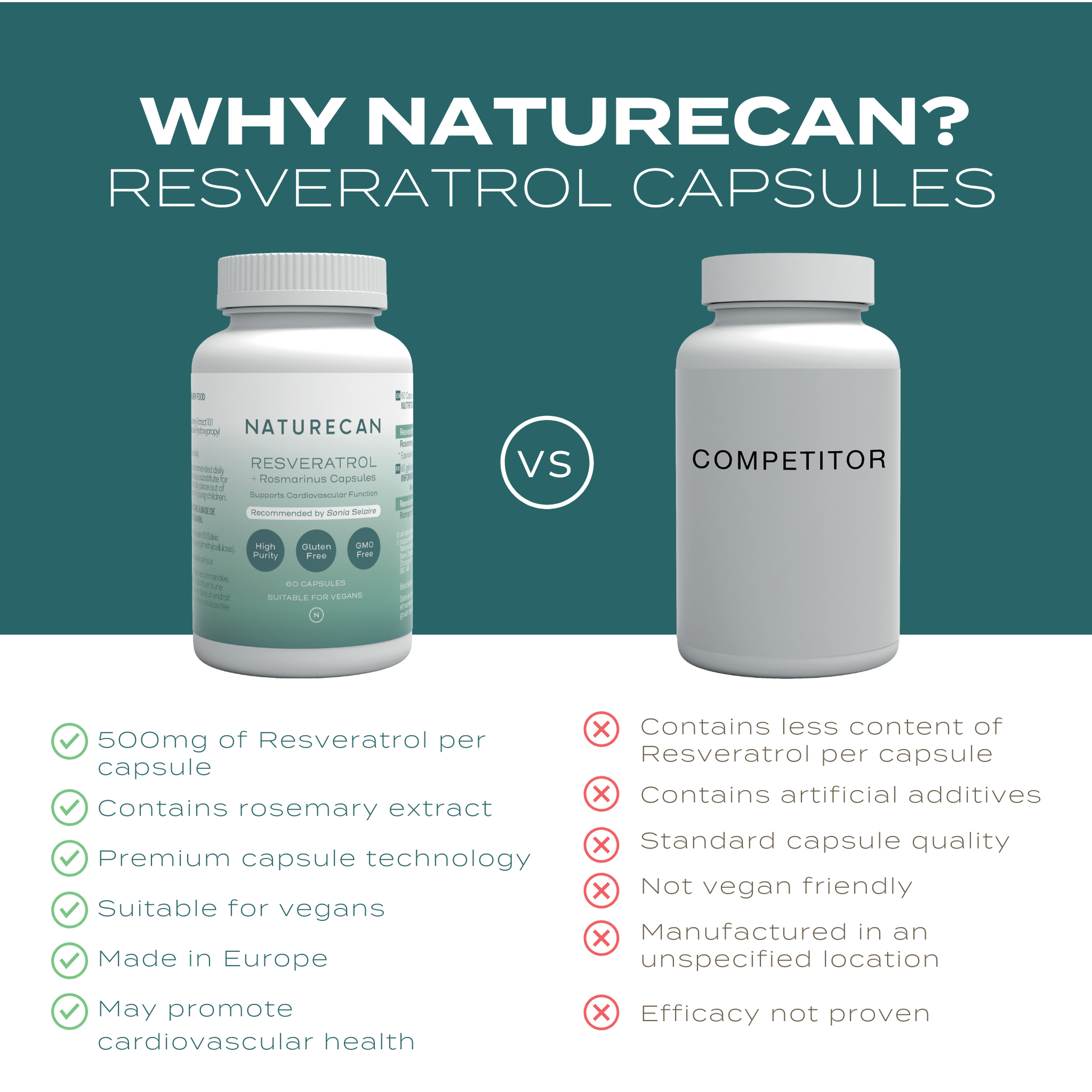
- 500mg of Resveratrol per capsule
- 60 capsules per jar
- Suitable for vegans
- Made in Europe
Please note: We’re updating our packaging, so you may still receive products in the previous design. Quality remains the same.
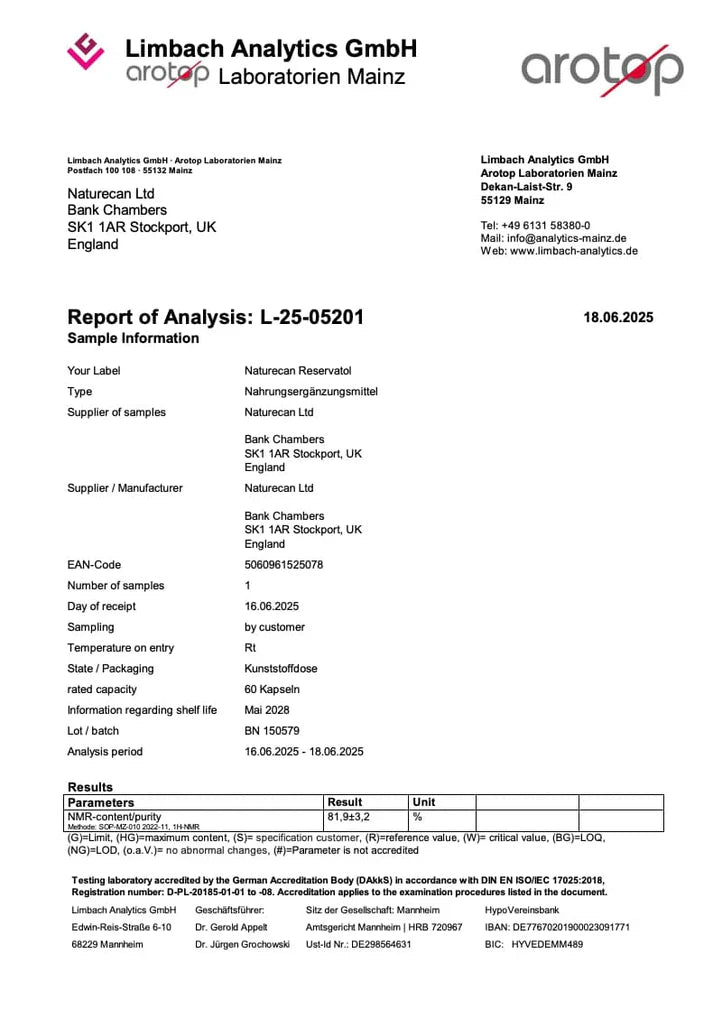
Access the Certificate of Analysis for Product Details and Quality
What is Resveratrol?
Resveratrol is a natural compound found in various plants, including grapes, berries, and certain nuts. It belongs to a group of substances known as polyphenols, which are characterized by their chemical structure.
Resveratrol is often associated with the skin of red grapes and is also present in red wine. In addition to its occurrence in food sources, resveratrol can be synthesized in laboratories and is available in supplement form.
Combining Resveratrol and NMN
You can take Resveratrol alongside NMN supplements. Many individuals choose to combine different supplements to create a regimen that aligns with their health goals. It’s common for people to explore the potential synergies between different supplements.
Recommended Usage
Take one 500mg Resveratrol capsule daily with water, preferably after a meal.
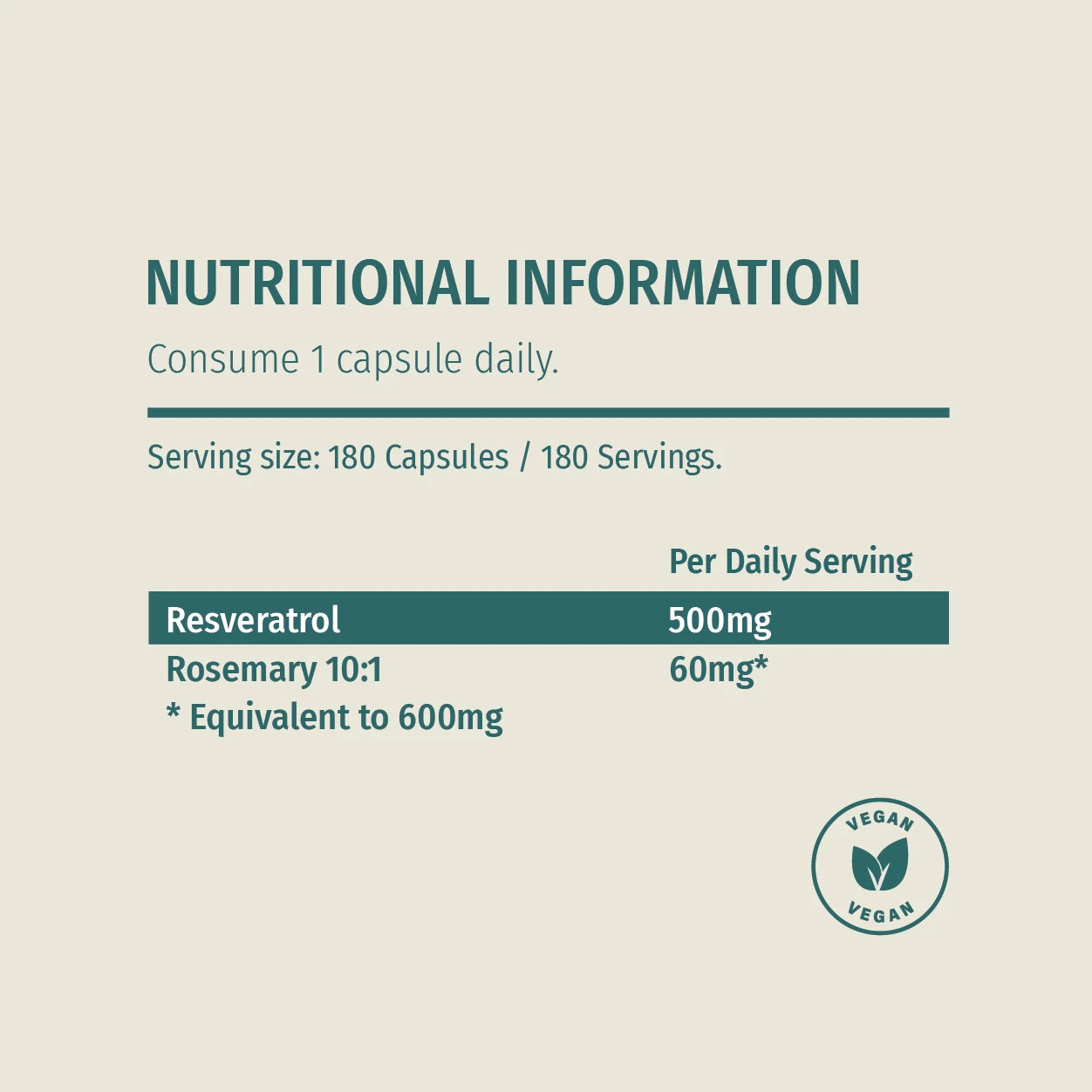
Nutritional Information
- Serving Size: 1 Capsule
-
Per Daily Serving:
- Resveratrol: 500mg
- Rosemary extract: 60mg
FAQs
- Is it safe to take Resveratrol daily? Yes, but consult a healthcare professional for personalized advice.
- What foods are high in Resveratrol? Red grapes, red wine, peanuts, and berries.
- Can pregnant or breastfeeding women take Resveratrol? It's recommended to consult a healthcare professional first due to limited safety data.
Explore our full range of vitamins and supplements at Naturecan to support your health and well-being!
Product FAQs

Product FAQs
What are the benefits of taking Resveratrol?
Benefits of taking Resveratrol include antioxidant properties, heart health support, and potential anti-inflammatory effects.
Is it okay to take Resveratrol daily?
Yes, it's generally safe to take Resveratrol daily, but consult with a healthcare professional for personalised advice.
What food is highest in Resveratrol?
Foods highest in Resveratrol include red grapes, red wine, peanuts, and certain berries like blueberries and cranberries.
Is Resveratrol anti-ageing?
Resveratrol has been studied for its potential anti-ageing effects, particularly in relation to its antioxidant properties and impact on cellular health.
What is Rosemary good for?
Rosemary is good for its potential cognitive benefits, antioxidant properties, and possible anti-inflammatory effects. For example, some studies have suggested that rosemary may significantly prevent brain ageing. According to Medical News Today, rosemary shows promise for the potential prevention of Alzheimer’s disease. Of course, more studies are needed, but this is an interesting review.
Can I take resveratrol while taking medicines?
Please ensure to consult your healthcare provider before taking resveratrol with any other medications, as interactions may occur.
Can pregnant or breastfeeding mums take resveratrol?
Pregnant or breastfeeding women should avoid resveratrol due to insufficient safety data. However, a 2018 review discovered that maternal resveratrol consumption during pregnancy has beneficial effects on metabolic health in both pregnant females and offspring. However, we recommend consulting a healthcare professional for personalised advice before taking any resveratrol if you are pregnant or breastfeeding.
Additional Information
Additional Information
| Legal status: | Resveratrol Supplement is sold in the UK in line with UK Novel Food legislation and Food Standards Agency (FSA) guidance. |
|---|---|
| Active ingredient: | Resveratrol |
| Maximum intake: | 150 mg daily Adults |
| How it works: | Resveratrol supports cellular health by activating pathways involved in antioxidant defence and metabolic regulation. |
| Scientific name: | Trans-resveratrol |
| Non-scientific name: | Resveratrol |
| Recommended intake: | 500 mg daily Adults |
| Safety: | Do not exceed the recommended daily intake. Food supplements should not be used as a substitute for a varied, balanced diet and healthy lifestyle. If you are pregnant, breastfeeding, taking medication or have a medical condition, consult a healthcare professional before use. Keep out of reach of children. |
| Used by: | Adults |
| Gtin: | 5060961526273 |
| Certification: | Resveratrol Supplement CoA |
|---|---|
| Certificaiton type: | Certificate of Analysis (CoA) |
| Certification issuer: | Power Health |
| Certification url: | https://cdn.shopify.com/s/files/1/0099/8319/7280/files/HGC1061_Resveratrol_500mg_Rosemary_600mg_BN_149433_5664.pdf?v=1731336070 |
| Study: | Health Benefits and Molecular Mechanisms of Resveratrol: A Narrative Review |
|---|---|
| Study url: | https://pmc.ncbi.nlm.nih.gov/articles/PMC7143620/ |
| Study subject: | Health benefits of resveratrol |
| Study design: | Narrative Review |
| Study description: | As detailed in this peer-reviewed review published in Foods, researchers summarized the health benefits of resveratrol, a polyphenol found in grapes and berries. The paper synthesizes findings from epidemiological, experimental, and clinical studies, detailing how resveratrol acts through molecular pathways (like SIRT1 and AMPK) to provide antioxidant, anti-inflammatory, and neuroprotective effects. It highlights its potential in preventing and treating chronic diseases such as cardiovascular disease, diabetes, obesity, and Alzheimer’s. |
| Study: | Resveratrol and Alzheimer’s disease: message in a bottle on red wine and cognition |
|---|---|
| Study url: | https://pmc.ncbi.nlm.nih.gov/articles/PMC4030174/ |
| Study subject: | Study into the positive impact of Resveratrol on brain cells |
| Study design: | Narrative Review |
| Study description: | Published in Frontiers in Aging Neuroscience, this peer-reviewed article evaluates the neuroprotective potential of resveratrol—the natural polyphenol famous for its role in the "French Paradox"—with a specific focus on Alzheimer's disease (AD). The authors synthesize evidence explaining how resveratrol acts as a broad-spectrum agent to combat the multifactorial nature of dementia. Key mechanisms highlighted include its ability to mitigate oxidative stress, modulate metal ion dysregulation (such as copper and iron), and interfere with the formation of amyloid-beta plaques. The review concludes that while single-target therapies for AD have largely failed, resveratrol's ability to influence multiple pathological pathways simultaneously makes it a promising candidate for slowing age-related cognitive decline. |